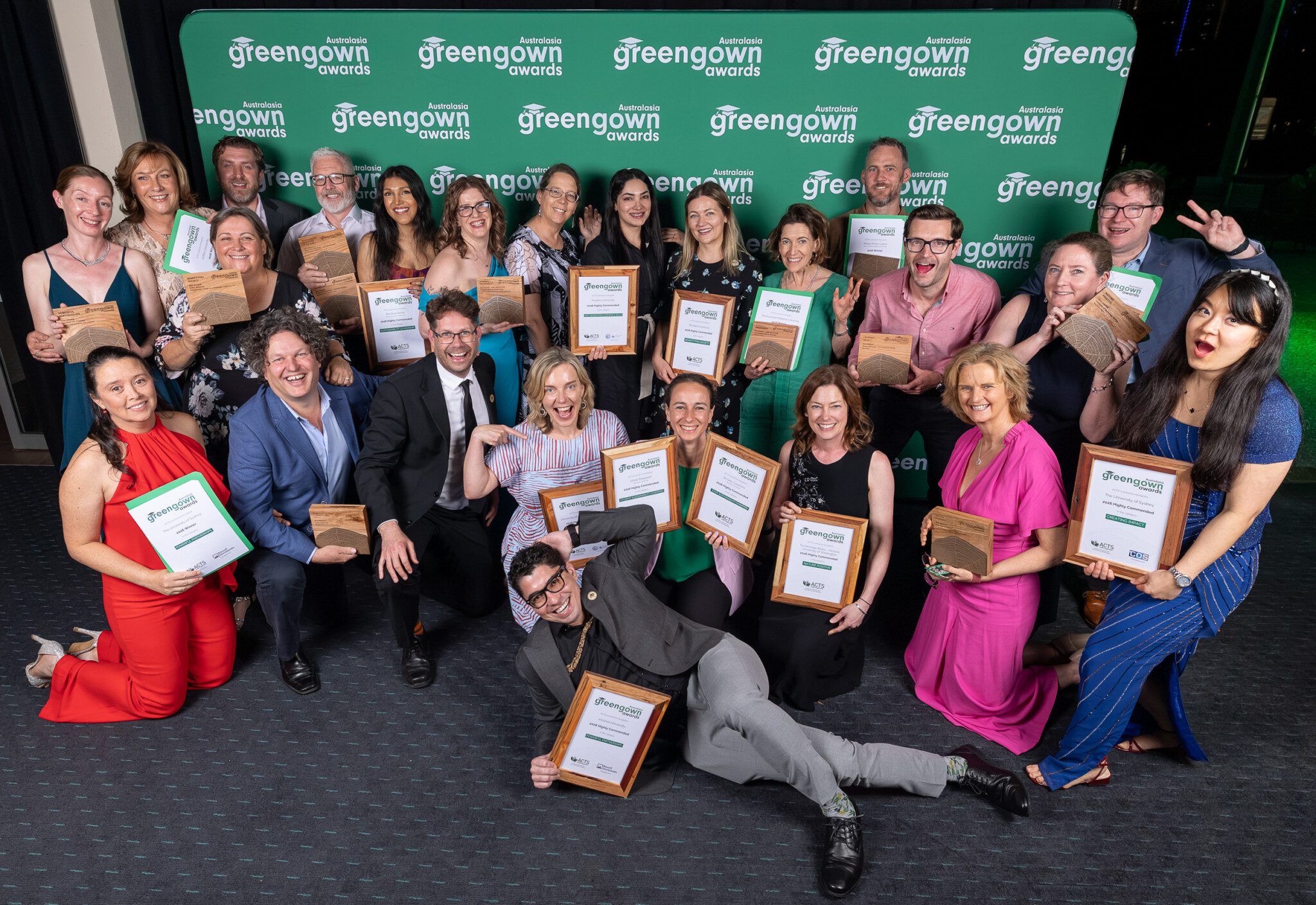
Faculty of Humanities’ Sustainability Challenge has won the 2026 Green Gown Award Australasia for Next Generation Learning and Skills, recognising its innovative approach to preparing students to respond to complex, real-world sustainability challenges.
The award celebrates learning experiences that equip students with the knowledge, confidence and practical skills to contribute to a more sustainable future. For the Faculty of Humanities, the recognition reflects the power of bringing together diverse disciplines, perspectives and partners to tackle the challenges that matter most.
Now in its fifth year, the Curtin Sustainability Challenge has been running since 2022. It is an intensive, credit-bearing learning experience delivered over one week, with students working in interdisciplinary teams to respond to real-world sustainability briefs set by industry, government, community and university partners.
In 2026, around 150 students took part in the Challenge, working across themes including climate action, resource use, sustainable communities, ecosystems, the built environment and the future of cities. Since its inception, the program has included over 600 students and engaged more than 30 industry partners. The program has also been delivered in partnership with Curtin’s global campuses in Singapore and Dubai and will be delivered at Curtin’s Colombo campus mid-November.
Working under genuine time pressure, students are supported by academic and industry mentors as they develop practical solutions and prototypes. The program culminates in a public showcase, where teams present their ideas to challenge partners, University staff and community members.
The independent judging panel recognised the Challenge for its highly engaging model of transdisciplinary, challenge-based learning. Judges particularly valued its sustained partner relationship and collaboration with Curtin’s Properties, Facilities and Development team to support positive sustainability outcomes on campus.
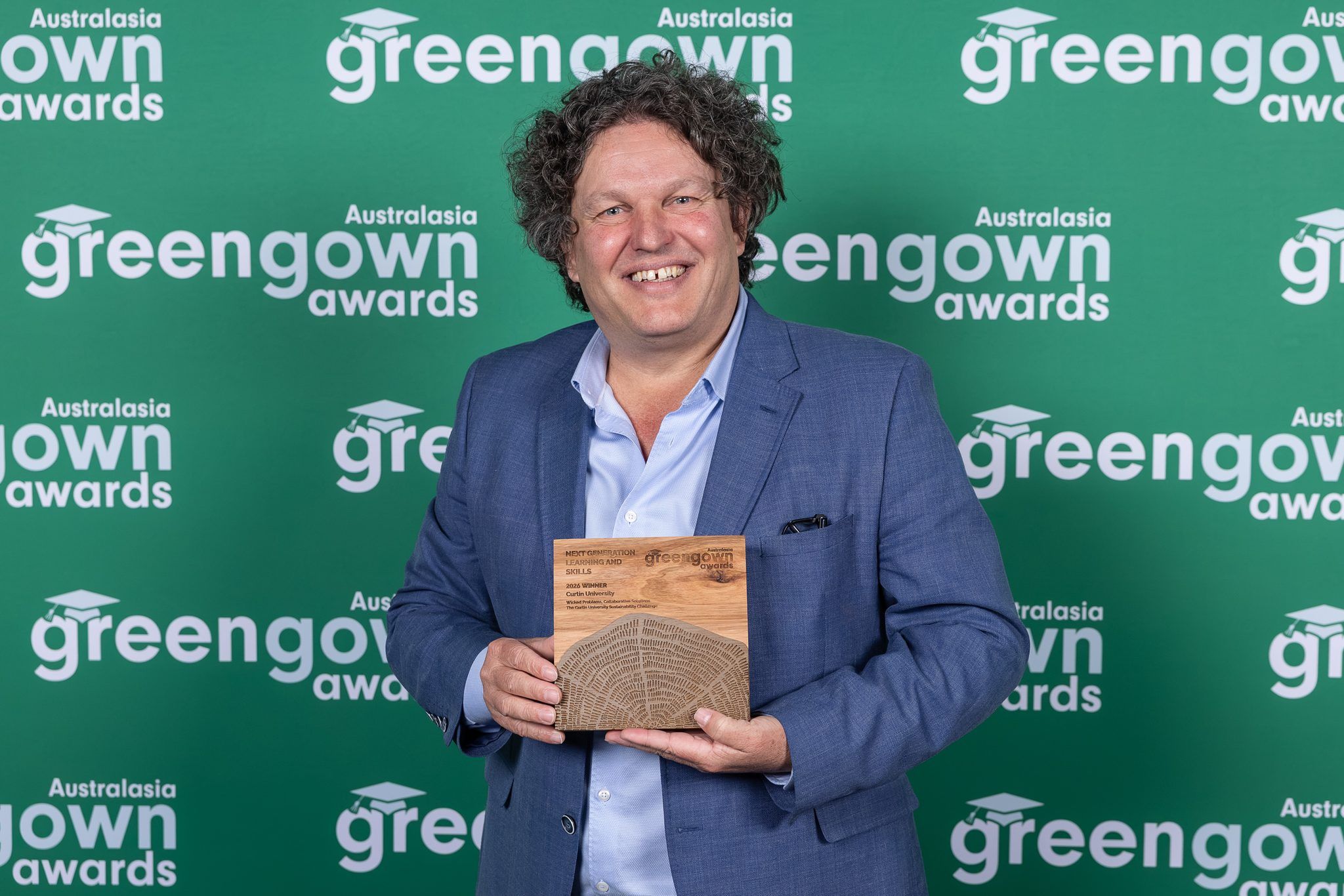
For Humanities, the award is a meaningful acknowledgement of the role that critical thinking, communication, creativity, cultural understanding and collaboration play in sustainability education. Addressing complex challenges requires more than technical expertise. It requires people who can listen, question, connect different perspectives and develop solutions that are grounded in the needs of communities.
The judges also recognised the potential for the Sustainability Challenge model to be adapted across the tertiary education sector, describing it as an excellent example of sustainability learning grounded in real-world action.
This recognition belongs to the students, academic mentors, challenge partners and wider Curtin community who have helped shape the program over the past five years.
Learn more about the .Ìý